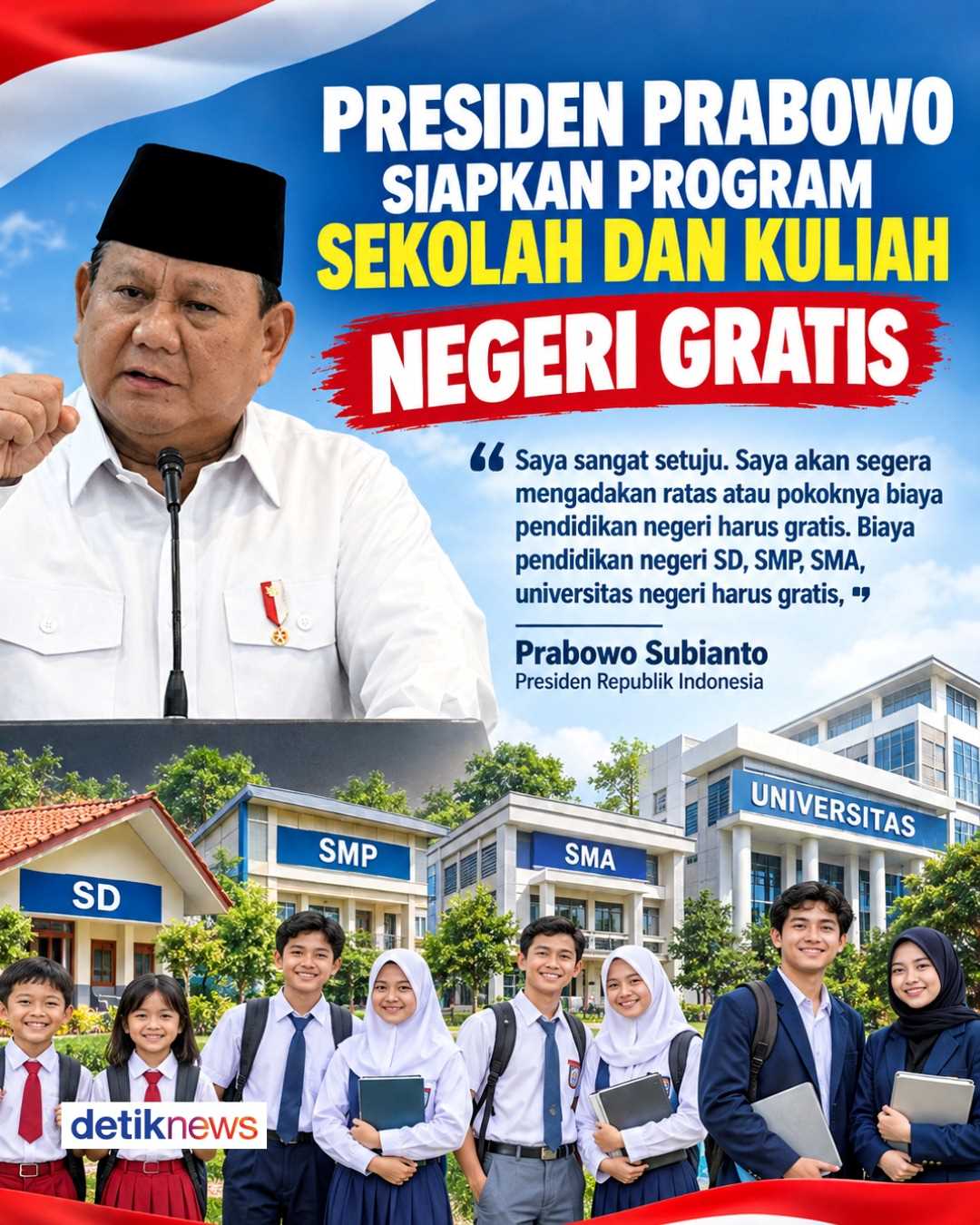
JAKARTA — President Prabowo Subianto’s plan to waive tuition fees at public educational institutions, from primary schools to universities, has drawn support from academics.
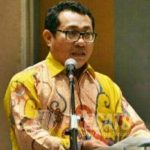
Yuddy Chrisnandi, a professor of political science at Universitas Nasional, said the policy would be a breakthrough that directly addressed people’s needs and expanded access to education for children from low-income families.
The former minister of administrative and bureaucratic reform, who served from 2014 to 2016, welcomed Prabowo’s commitment to ensuring that the cost of attending public schools would no longer burden families. He also related the policy to his own experience of completing all levels of his education at public institutions.
“I studied entirely at public schools, from elementary school through my doctoral degree. I attended elementary, junior high and senior high schools in Cirebon, earned my bachelor’s degree at Universitas Padjadjaran, and completed my master’s and doctoral degrees at Universitas Indonesia. All of them were publicly funded institutions,” Yuddy said in a written statement on Thursday (Sept. 24).
“Tuition was still relatively affordable for my parents at the time compared with private schools, but getting through it was not easy, given the various other costs associated with education. Today, school expenses have become a significant burden for parents, even those whose children attend public schools,” he added.
Yuddy’s career extends beyond academia. In addition to serving as a cabinet minister, he was Indonesia’s ambassador to Ukraine, concurrently accredited to Georgia and Armenia, from 2017 to 2021. He said his experience in both government and academia had given him a clear understanding of the financial pressures education places on middle- and lower-income families.
As an academic with a background in both economics and politics, Yuddy said debate over the source of funding for the program was understandable, but should not be used as a reason to delay its implementation.
“The main issue is not whether the money exists, but where the state chooses to direct its resources. This is a matter of political will, and President Prabowo has shown that willingness,” he said.
On funding, Yuddy said the state budget, or APBN, should still be capable of supporting the program. He suggested that the government could finance it through efficiency measures and the refocusing of development programs, without relying on proceeds from confiscated assets recovered from corruption cases.
Yuddy also said Prabowo’s proposal could begin to be implemented in the 2027 fiscal year. He suggested a phased approach, starting with public schools from primary through senior high school in disadvantaged, remote and impoverished areas, particularly rural communities.
“We should start with elementary through senior high schools, then gradually expand to urban areas, before eventually extending the policy to public universities,” he said.
Yuddy said the government’s plan was consistent with the Constitution, which recognizes education as a right of every citizen. He also referred to a Constitutional Court ruling requiring the government to provide free basic education, both at public schools and schools run by the community.
“President Prabowo’s policy translates the constitutional mandate into concrete action. If implemented, we will be building a ladder for children from modest families to move up socially, just as I did,” he said.
Yuddy said he hoped the program would be introduced through careful planning and accountable governance so that its benefits would reach those most in need.
Prabowo reiterated his plan to make public education free in a speech commemorating the 28th anniversary of the National Mandate Party (PAN) in Jakarta in mid-September. He said education at public institutions, from elementary schools to public universities, should be free and should no longer place a financial burden on the public.
The president subsequently held a limited meeting at the State Palace in Jakarta on Wednesday (Sept. 23, 2026) to discuss mechanisms for implementing the policy across all levels of education.
Daffa Ibrahim