
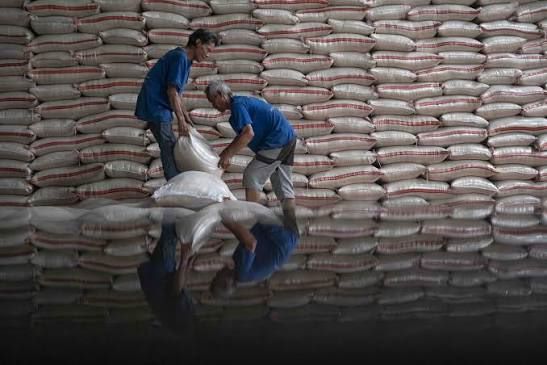
JAKARTA — Indonesia’s Agriculture Minister and Head of the National Food Agency (Bapanas), Andi Amran Sulaiman, has confirmed that the government’s national rice reserve, known as the Government Rice Reserve (CBP), currently stands at 5.1 million tonnes.
According to Sulaiman, the stock is at its highest level despite the ongoing impact of El Niño and is considered sufficient to meet domestic demand.
“Despite El Niño, our current stock is at its highest level, reaching 5.1 million tonnes,” Sulaiman said on Wednesday.
He said the government’s rice reserves would provide a buffer against the effects of climate change and potential disruptions to the global economy.
The CBP, which is managed by the State Logistics Agency (Bulog), is expected to ensure adequate supplies for the public while helping the government respond to climate-related disasters and other emergencies.
Sulaiman expressed gratitude for Indonesia’s food security, particularly the country’s rice supply. He stressed that the government would continue to maintain balance throughout the rice supply chain, from producers to consumers.
Nevertheless, he acknowledged that climate change could create challenges for rice prices. Although global rice prices are currently rising, Sulaiman said Indonesia’s substantial reserves would help ensure that the public’s basic food needs remained secure.
The government is also distributing CBP stocks through various intervention programmes aimed at maintaining adequate supplies and stabilising market prices.
Data from Bapanas showed that the nationwide distribution of government rice reserves had reached 1.69 million tonnes as of 24 August 2026.
The figure included 221,050 tonnes of rice sold under the Food Supply and Price Stabilisation (SPHP) programme during January and February, followed by another 688,980 tonnes distributed under the SPHP programme between March and August.
In addition, 662,860 tonnes had been distributed during the first phase of the government’s food assistance programme, while a further 59,830 tonnes had been distributed under the second phase, which is already under way.
The government also distributed 11,390 tonnes for disaster relief and emergency needs, while 53,680 tonnes were allocated to budget groups.
With reserves exceeding five million tonnes, the government maintains that Indonesia has sufficient rice stocks to safeguard food availability and support market stability despite the challenges posed by El Niño and climate change.
Daffa Ibrahim