
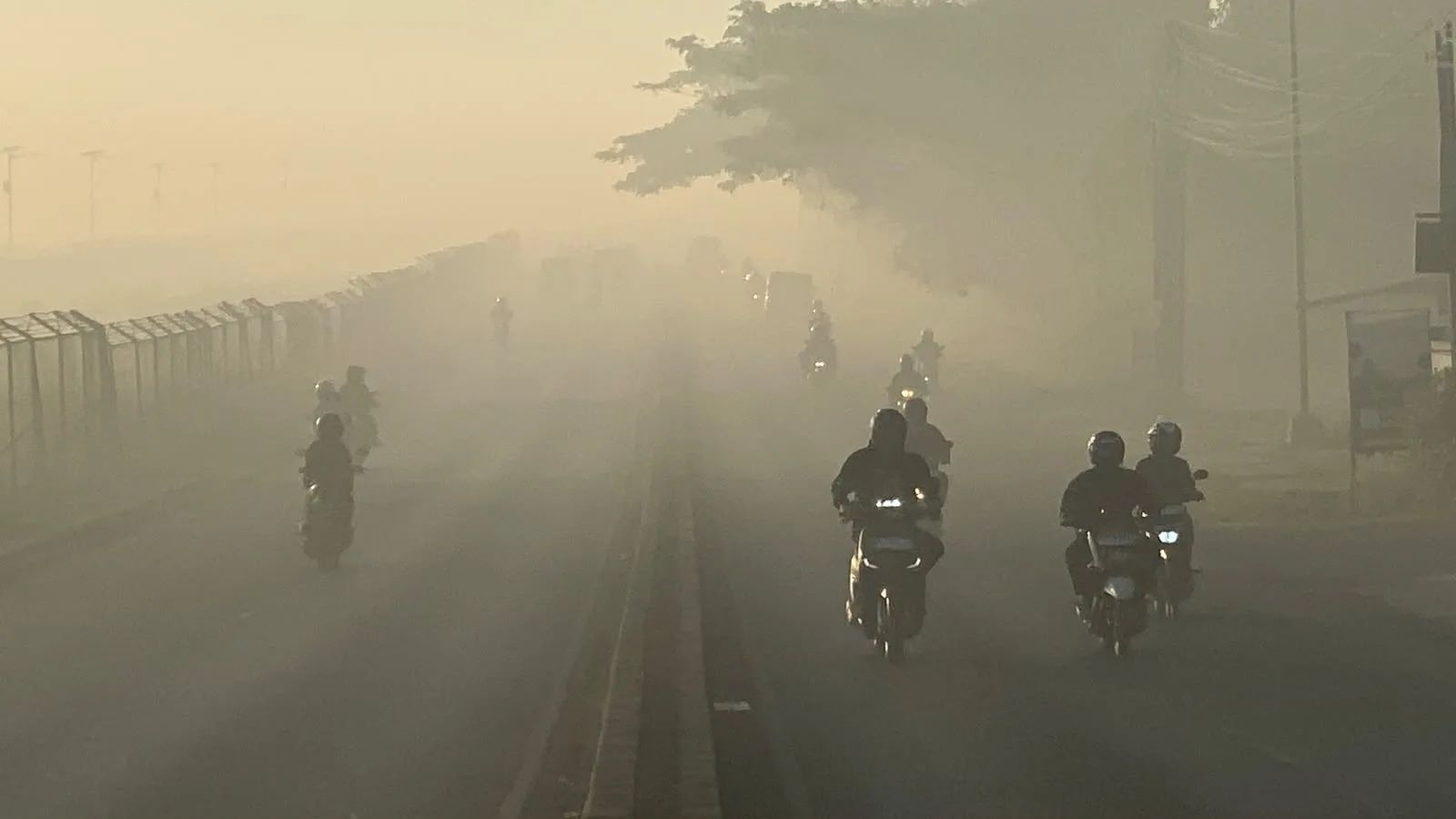
The 2026 forest and land fires should force Indonesia to confront a difficult question: is the country becoming better at fighting fires, or better at preventing the conditions that allow them to spread?
Indonesia has demonstrated that it can mobilise significant resources once fires break out. Firefighters, disaster-management agencies, local governments, military and police personnel, volunteers and communities can be brought together to contain burning areas. Water-bombing operations, ground teams and emergency coordination can help prevent fires from becoming even larger disasters.
That capacity matters. But it is not enough.
A country cannot achieve meaningful climate resilience simply by becoming more efficient at responding to emergencies. The real test of climate governance is whether institutions can identify risks, prevent fires and reduce vulnerability before smoke spreads across communities.
The problem begins before the fire
Forest and land fires rarely appear without warning. Prolonged dry conditions, vulnerable peatlands, land-use practices, unmanaged vegetation and human activity can combine to create highly combustible landscapes.
This means prevention should not be treated as a secondary task that begins after the authorities issue an emergency warning. It should be built into land-use planning, environmental management and local government policy throughout the year.
Indonesia therefore needs to strengthen its ability to answer several basic questions before the fire season intensifies.
Which areas are most vulnerable? Who controls the land? What preventive measures have been implemented? Who is responsible if those measures fail? Are communities equipped to respond to an early fire? And are companies and land managers meeting their environmental obligations?
Without clear answers, firefighting will remain an endless cycle: fire, emergency response, containment, recovery and then another fire.
Climate risk is also a governance risk
The forest and land-fire problem is often presented as an environmental issue. It is that, but it is also a governance issue.
Climate change can increase the likelihood and severity of extreme weather conditions. Yet climate hazards become disasters largely because societies are exposed and vulnerable.
A dry season alone does not explain why a fire becomes a major crisis. The scale of the impact also depends on how land is managed, how quickly authorities detect fires, whether preventive rules are enforced and whether local communities have the resources to respond.
This is why climate policy cannot be separated from public administration.
Government institutions need reliable data, clearly defined responsibilities and mechanisms that allow officials to act before conditions become critical. Early-warning systems are useful only if warnings lead to concrete action.
A hotspot detected by satellite should not simply become another number on a monitoring dashboard. It should trigger verification, assessment and, where necessary, immediate intervention.
Firefighting must not become a substitute for prevention
There is a natural political temptation to focus on visible emergency operations. A firefighting team arriving at a burning location demonstrates immediate action. It provides a clear image of government responding to a crisis.
Prevention is less visible.
Clearing dangerous vegetation, restoring degraded peatlands, maintaining canals and water infrastructure, improving land management, educating communities and enforcing environmental regulations rarely generate dramatic headlines. Yet these measures can save far more resources and lives than emergency operations conducted after a fire has spread.
The government should therefore measure success not only by the number of fires extinguished, but also by the number of fires prevented, the area protected and the reduction in communities exposed to hazardous smoke.
That would represent a significant shift in policy thinking—from response performance to risk reduction.
Communities must be part of the solution
Climate governance will also fail if it is designed entirely from the top down.
Communities living near forests, peatlands and plantation areas often have the earliest knowledge of changing conditions. They can identify smoke, unusual heat and emerging fires before national response systems arrive.
Local communities should therefore be treated as partners rather than simply recipients of government assistance.
Training, equipment, communication networks and incentives for community-based prevention can strengthen the first line of defence. Local governments should also have sufficient resources and authority to act quickly when risks emerge.
At the same time, communities must not be left to carry the responsibility alone. When fires originate from larger land-use activities, accountability must extend to the parties responsible for managing those areas.
Climate justice means protecting those who bear the greatest cost
The consequences of forest and land fires are not shared equally.
People living in fire-prone areas can face hazardous air quality, disruption to education and economic activity, reduced mobility and threats to their livelihoods. Children, older people and other vulnerable groups can be particularly affected when smoke pollution becomes severe.
This raises an important question of climate justice: who benefits from land use, and who pays when environmental risks become disasters?
A fair climate policy must ensure that communities do not repeatedly bear the costs of decisions made elsewhere.
Companies, governments and other actors involved in land management must therefore be held to clear standards. Where negligence contributes to environmental damage, accountability should be transparent and consistent.
Indonesia needs institutions that manage risk before crisis
The lesson of the 2026 fires should not simply be that Indonesia needs more firefighting equipment or more emergency personnel.
Those resources remain important, but they are only one part of the solution.
Indonesia needs institutions capable of managing climate risk systematically. That means integrating climate projections into land-use planning, improving fire-risk mapping, strengthening environmental enforcement, protecting peatlands and forests, and ensuring that local authorities have the resources needed for prevention.
It also means improving coordination. Fire does not respect administrative boundaries, while government responsibilities are often divided between national and local institutions.
A successful prevention strategy therefore requires shared data, rapid communication and clearly defined responsibilities.
The real measure of success
Indonesia should not wait for the next major fire season before evaluating what worked and what failed in 2026.
An independent and transparent assessment should examine where fires occurred, why they started, how quickly they were detected, how long they took to contain and whether preventive measures had been implemented beforehand.
The findings should become the basis for concrete policy changes rather than another report placed on a government shelf.
The country already possesses many of the tools required to manage the problem. The challenge is connecting those tools into a system that prioritises prevention, accountability and resilience.
Indonesia has shown that it can fight fires.
Now it must demonstrate that it can govern the risks that cause them.
That is the difference between responding to climate disasters and building climate resilience. And ultimately, that is where climate justice begins—not when the smoke fills the air, but with the decisions made long before the first flame appears.
MN Farizki