JAKARTA — Banks, as business entities, must remain neutral and should not be used by the state as instruments of repression against citizens in a democratic society, journalists said during a discussion in Jakarta.
Using banks as instruments of repression could place financial institutions in direct conflict with the public, potentially threatening both their physical security and public trust.
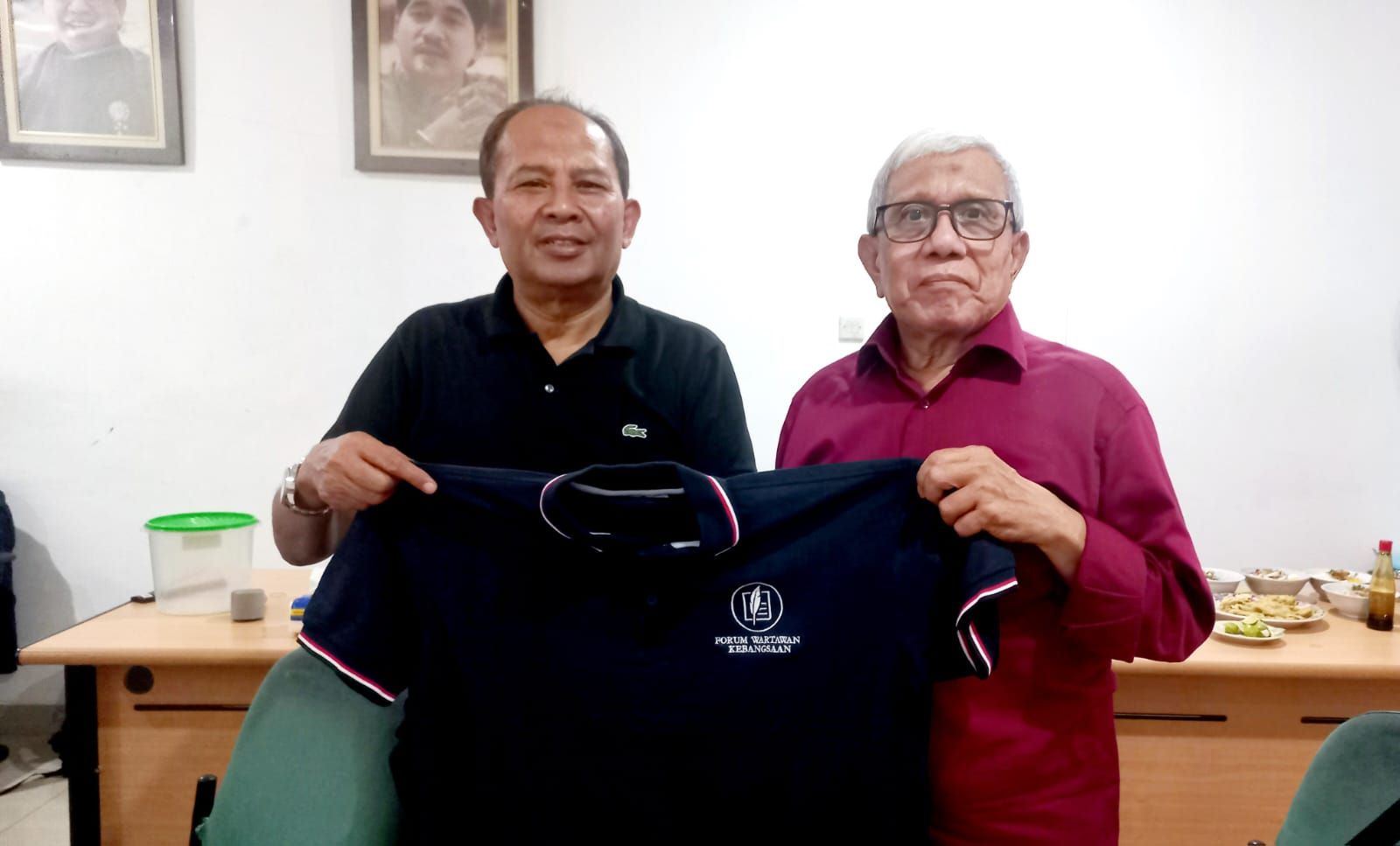
The issue was raised during the “Rabuan” (Wednesday) discussion organised by the National Journalists Forum (FWK) in Jakarta on Wednesday (26 August 2026). The discussion was moderated by FWK National Coordinator Raja Parlindungan Pane and attended by a number of senior journalists, editors and editors-in-chief.
The participants examined the risks arising from the freezing of a Bank Mandiri account belonging to activist Supriyono, also known as Botok, from Pati, Central Java. Supriyono is known as an activist who has voiced aspirations concerning improvements to state and government governance.
The account freeze, which occurred shortly before a planned demonstration outside the House of Representatives (DPR RI) building, drew criticism from various quarters. The action was considered by some to have infringed on civil rights and prompted protests on social media.
The latest development is that Supriyono’s account has been reactivated. The Jakarta Metropolitan Police and Bank Mandiri confirmed the reactivation of the account belonging to Supriyono, Coordinator of the United Pati Community Alliance (AMPB).
The confirmation was delivered by Jakarta Metropolitan Police Director of General Criminal Investigation Senior Commissioner Iman Imanuddin and PT Bank Mandiri (Persero) Tbk President Director Riduan during a Commission III meeting at the DPR RI building in Jakarta on Wednesday.
FWK founder Hendry Ch. Bangun, who attended the discussion, expressed concern over the alleged use of banks to put pressure on civilians exercising their constitutional right to freedom of expression.
He said such a practice could have serious consequences for the banking industry, particularly in terms of public confidence.
“Such methods are extremely dangerous. Once again, this poses a risk to the banking business and to public trust, both domestically and internationally,” Hendry said.
Hendry, a former Deputy Chairman of the Press Council, stressed that freedom of expression is protected under Article 28 of the 1945 Constitution.
Raja Parlindungan Pane also questioned the freezing of Bank Mandiri customers’ accounts, particularly when the affected customers were expressing their views on improving state governance.
“Customers ought to be guaranteed the confidentiality of their financial records held by the bank. Instead, their information is disclosed to law enforcement agencies, and their accounts are subsequently blocked. Where is the bank’s protection for its customers in this instance?” Raja said.
FWK Secretary Dr Budi Nugraha shared the concern, arguing that banks have a responsibility to protect their customers and ensure that account restrictions are not imposed arbitrarily.
“This sets a bad precedent. It implies that customers who are vocal about state governance could find their accounts blocked by the bank,” Budi said.
Senior journalists Herwan and M. Nasir similarly argued that banks should not arbitrarily freeze customers’ accounts at the request of any party, including law enforcement authorities.
According to them, where there are indications of wrongdoing, the relevant legal procedures should first be followed, including a formal summons for investigation.
Nasir, a former journalist with Kompas, questioned the ethical implications of allowing banks to become political instruments.
“Ethically speaking, is it permissible for a bank to be used as a political tool or an instrument of state repression? Where is the bank’s responsibility to protect its customers?” Nasir asked.
Meanwhile, senior journalist Sigit Setiono said the discussion should not stop at the account freeze itself. He argued that the parties behind the decision should also be identified.
“If the police requested the freezing of the activist’s account—an action that undermines trust in the banking system—then the police must also be held accountable,” Sigit said.
Daffa Ibrahim