Jakarta – 80 percent of digital advertising spending in Indonesia now flows to three global platforms: Google, Meta, and TikTok. Meanwhile, more than 50,000 press companies in Indonesia must share the remaining market share of only around 20 percent.
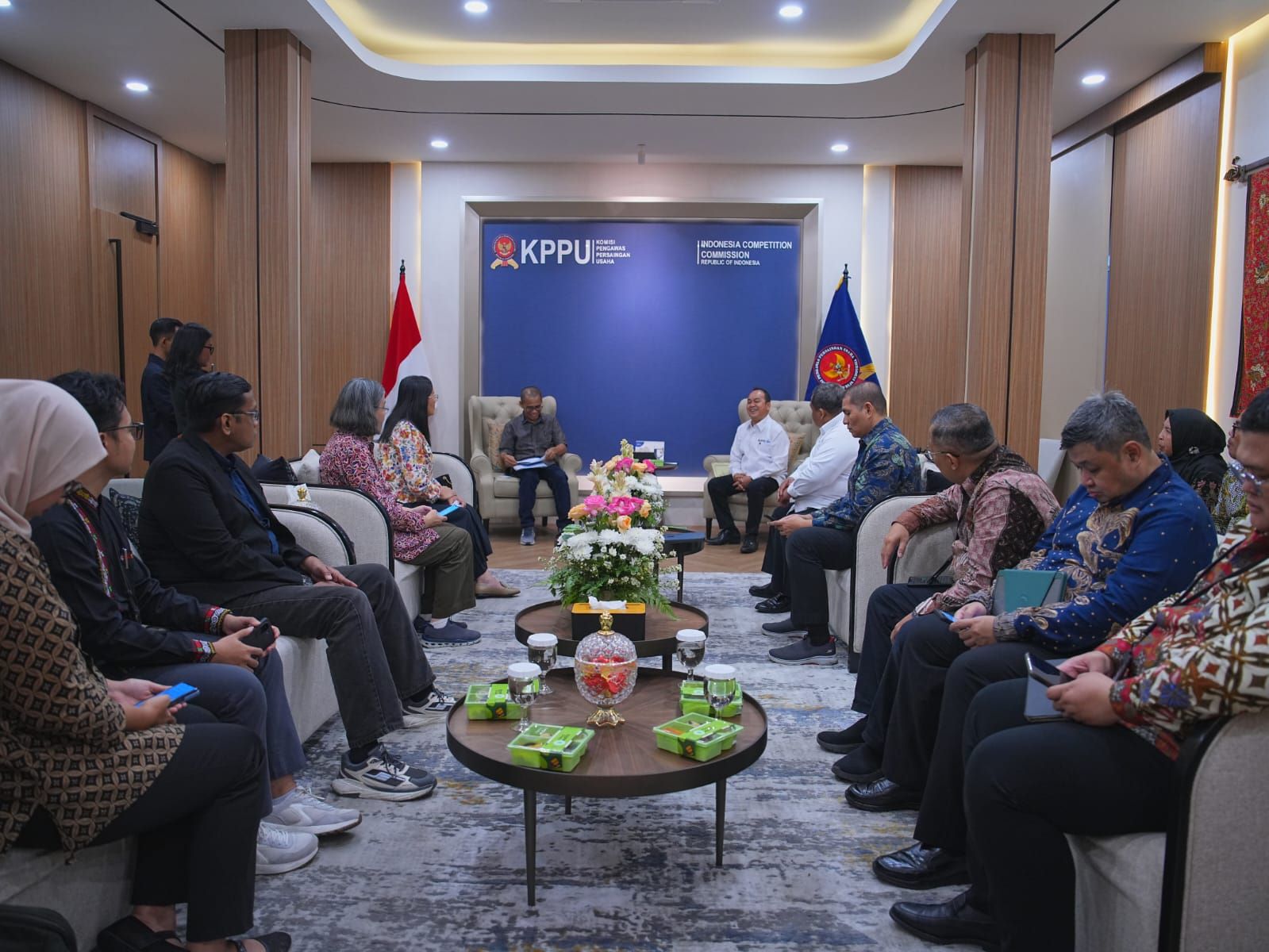
This imbalance is considered to threaten not only the sustainability of the media business but also press freedom. This issue was the focus of a meeting between the Press Council and the Business Competition Supervisory Commission (KPPU) in Jakarta on Wednesday, July 8, 2026.
The two institutions discussed the impact of digital platform dominance on the national press industry, ranging from unequal control of the advertising market, protection of journalistic works, to the need to update competition regulations in the digital economy era.
Dahlan Dahi, a member of the Press Council and Chair of the Digital and Sustainability Commission, stated that the Press Council’s challenge is no longer limited to maintaining journalistic ethics, but also ensuring press companies remain resilient amidst the changing digital landscape.
“Around 80 percent of the digital advertising market is controlled by Google, Meta, and TikTok. The remainder is being fought over by more than 50,000 press companies. This situation is clearly unsustainable for the press industry,” said Dahlan.
This market structure has the potential to create monopolistic tendencies and unfair business competition practices. Therefore, the Press Council believes that media sustainability issues cannot be resolved solely through a copyright approach but also require a competition law approach.
According to Dahlan, the Press Law mandates the Press Council to facilitate the development of the press. In the current context, this mandate includes efforts to maintain the sustainability of the national media ecosystem, which is facing significant pressure from the dominance of digital platforms.
One step the Press Council is currently taking is to encourage the recognition of journalistic works as objects of copyright through collaboration with the Ministry of Law. The current mechanism, which allows news to be quoted with source acknowledgment, is considered inadequate in the era of digital content distribution and artificial intelligence.
He stated that journalistic works are now being used as raw material by digital platforms and artificial intelligence systems to train models and present information to users without providing commensurate economic value to press companies.
This phenomenon, he continued, is exacerbated by the emergence of generative AI, which has the potential to present information without redirecting users back to media sites. As a result, media outlets are losing reader traffic and the revenue sources that have historically supported their businesses. “Publishers are in a position where they have no bargaining power over platforms. The system is no longer balanced,” Dahlan said.
Press Council Proposal to KPPU: During the meeting, the Press Council proposed the formation of a joint working group with the KPPU to identify practices that potentially violate competition principles in the digital sector.
The Press Council also proposed joint advocacy with the press community regarding competition law and knowledge exchange with the South African competition authority, which has previously conducted studies on digital platform dominance.
KPPU Chairman Gopprera Panggabean stated that the challenges of the digital economy can no longer be fully addressed by Law Number 5 of 1999 concerning the Prohibition of Monopolistic Practices and Unfair Business Competition.
According to him, the KPPU and the House of Representatives are discussing revisions to the law to accommodate the characteristics of the digital economy. One of the proposed changes is the merger oversight mechanism, shifting from post-merger to pre-merger.
This mechanism will allow oversight of acquisitions to be conducted before the transaction takes place, thus preventing potential market domination from the outset. Furthermore, the measurement of market domination will be expanded. It will no longer be based solely on sales and purchase prices, as stipulated in current law, but will also consider data control, network effects, the number of active users, and other indicators that characterize the digital economy.
“If the regulations are not updated, the KPPU will find it increasingly difficult to supervise the digital sector because the challenges of the digital economy are vastly different from those when the law was drafted in 1999,” said Gopprera.
The KPPU will further study the various practices presented by the Press Council, including the possibility of forming a joint task force to map issues, collect data, compare practices across countries, and assess whether there are elements of competition violations or whether new regulations are needed.
For the Press Council, regulatory reform is part of an effort to maintain the sustainability of the national media industry. Without a healthy business ecosystem, press freedom is threatened not only by ethical issues but also by the weakening of press companies’ ability to compete.