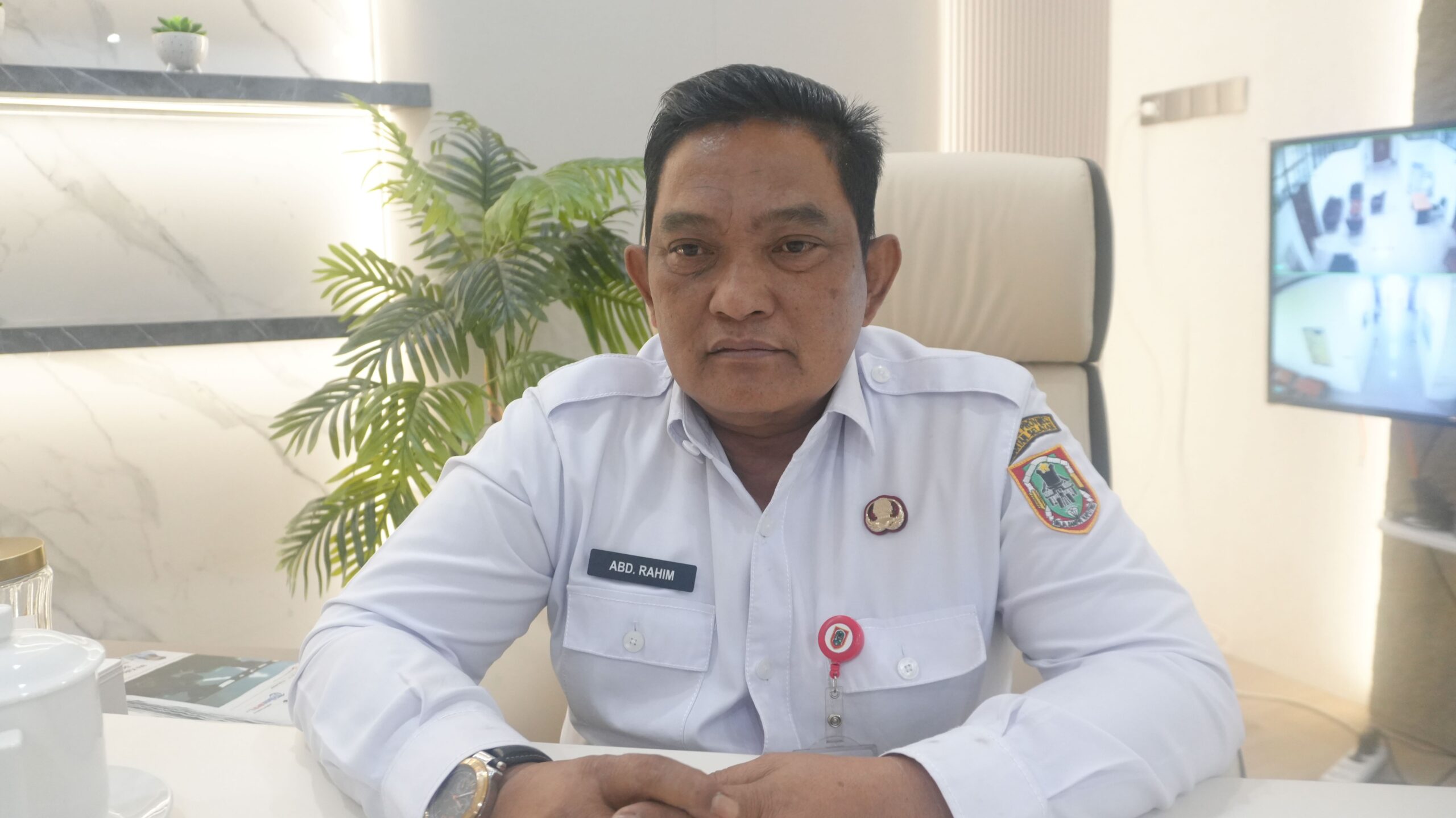
BANJARBARU — The South Kalimantan Provincial Government, through the Education and Culture Office (Disdikbud), has designated improving the quality of human resources (HR) as a top priority for education sector development in 2026. This policy is implemented through strengthening the competencies of students and educators, equalizing access to education, and aligning the learning system with national policies.
The Head of the South Kalimantan Education and Culture Office, Abdul Rahim, stated that the direction of regional education development aligns with the vision of South Kalimantan Governor H. Muhidin, who places improving the quality of human resources as the foundation for realizing a superior, cultured, and morally upright society.
“Improving the quality of human resources is a priority. Not only students, but also educators must continuously improve their competencies to be able to face the changing times and the demands of the workplace,” said Abdul Rahim.
According to him, improving teacher competency is carried out through various training programs and technical guidance, including strengthening digital skills and technology-based learning. On the other hand, students are encouraged to develop better academic abilities and character through a learning system that adapts to current developments.
In support of national policies, the South Kalimantan Education and Culture Office has also begun adapting various educational programs. One example is the implementation of the Academic Ability Test (TKA), which is being implemented nationally as an instrument to measure student learning outcomes.
Furthermore, the implementation of the 2026 New Student Admissions System (SPMB) has been adjusted in accordance with technical guidelines from the Ministry of Primary and Secondary Education. To reduce the backlog of applicants at favored schools, the regional government is implementing a crossover mechanism as an effort to ensure equitable distribution of students.
The South Kalimantan Education and Culture Office also supports the implementation of the People’s School Program initiated by the central government. This program is coordinated by the Social Services Office, while prospective student data is collected using the Basic Education Data (Dapodik), which has been integrated with the regional education system.
Equitable access to education is also a primary concern of the regional government through strengthening inclusive education for children with special needs. Based on the 2025 evaluation, 334 senior high schools (SMA) and vocational high schools (SMK) in South Kalimantan have been designated as providers of inclusive education, comprising 207 SMA and 127 SMK.
Of these, 304 students with special needs at the vocational high school level have received educational services. This achievement demonstrates the increasing access to equal education for all children, regardless of their physical condition or abilities.
Abdul Rahim emphasized that the development of inclusive education is part of the implementation of the South Kalimantan Provincial Government’s vision, which upholds the spirit of Working Together, Embracing All.
“Every child has the same right to receive quality education services without discrimination. Therefore, inclusive education must continue to be strengthened so that all children have equal opportunities to develop,” he said.
To support this policy, the South Kalimantan Education and Culture Office (Disdikbud) is focusing its program on three main aspects: expanding access to education, improving service quality, and strengthening the capacity of educational human resources. These steps include developing inclusive schools, updating data on students with special needs, improving teacher competency, and strengthening the Disability Service Unit (ULD).
In addition, the regional government continues to accelerate the equitable distribution of educational facilities and infrastructure, the construction of new schools, the digital transformation of learning, and the implementation of policies limiting cell phone use in schools to improve student concentration.
Through these various programs, the South Kalimantan Education and Culture Office is optimistic that the quality of education in the region will become more equitable. The hope is that education will produce a superior generation with character, adaptable to technological developments, and ready to face future challenges.