BANJARMASIN — The South Kalimantan Provincial DPRD (Regional People’s Representative Council) approved the Draft Regional Regulation (Raperda) concerning Accountability for the Implementation of the 2025 Regional Budget (APBD) for enactment as a Regional Regulation. The approval was accompanied by several strategic notes emphasizing the importance of improving the quality of regional spending and resolving all findings by the Supreme Audit Agency (BPK).
In a plenary session, the DPRD commended the South Kalimantan Provincial Government’s success in once again achieving an Unqualified Opinion (WTP) on the Regional Government Financial Report for the 2025 Fiscal Year. However, this achievement should not make the regional government complacent.
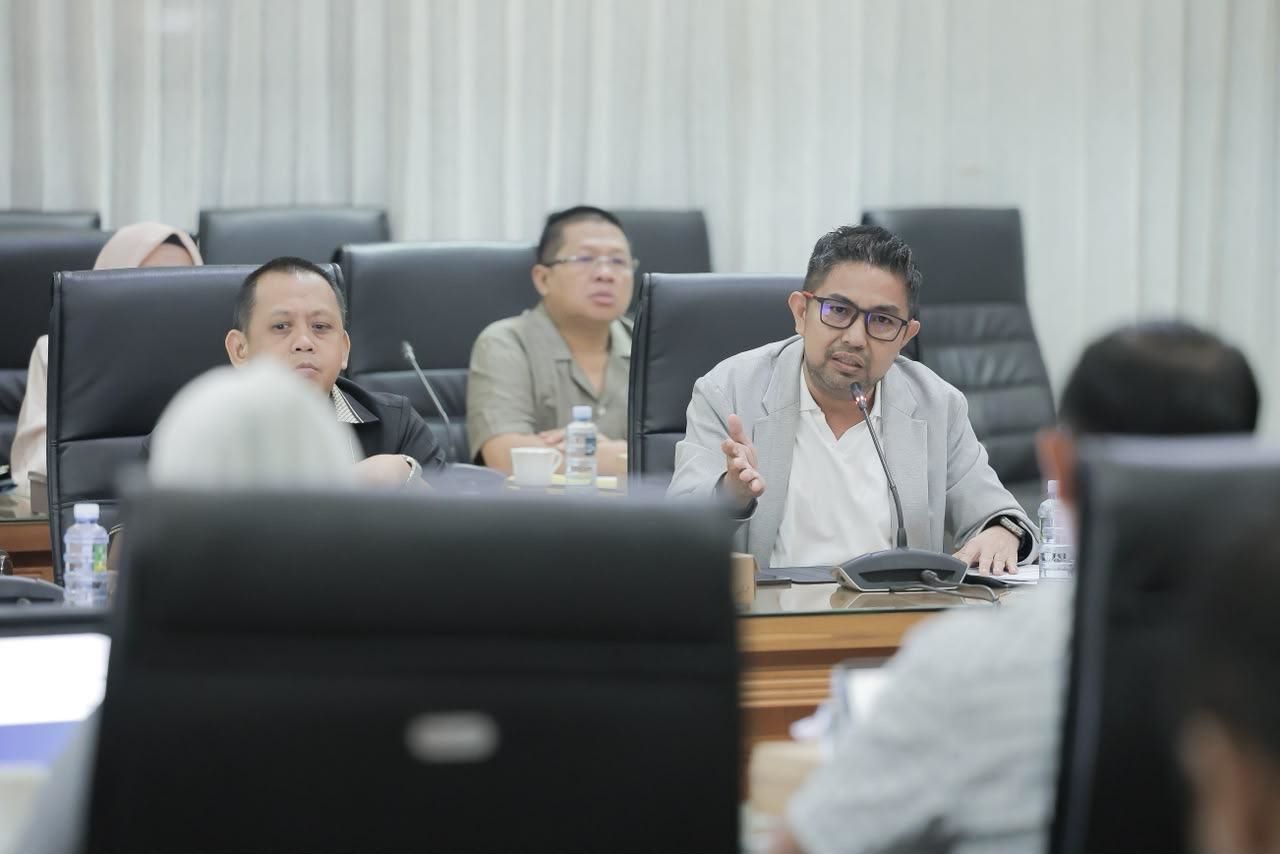
A member of the South Kalimantan DPRD from the United Democratic Party of Struggle (PDIP) faction, Bang Dhin, emphasized that the WTP opinion is an indicator of the quality of financial report presentation, not a benchmark for the success of all development programs.
“The WTP opinion is commendable, but it should be interpreted as a starting point, not a final goal. The Supreme Audit Agency (BPK) still found around ten findings in the aspects of revenue, expenditure, and asset management. All of these recommendations must be followed up promptly and thoroughly to prevent recurrence,” he said.
The Regional People’s Representative Council (DPRD) also highlighted the realization of the 2025 Regional Budget (APBD). Regional revenues were recorded at around IDR 11.18 trillion, while spending realization only reached around 82.76 percent. This situation resulted in a Budget Surplus (SiLPA) of around IDR 2.97 trillion.
According to Bang Dhin, the large SiLPA indicates the need for improvements in planning, budgeting, and program implementation so that the allocated budget can immediately benefit the community.
In addition, the DPRD submitted several recommendations in five strategic sectors. In education, the government was asked to accelerate the construction and improvement of school infrastructure, finalize the legal framework for the management of Regional Public Service Agencies (BLUD) for Vocational High Schools (SMK), and improve the quality and welfare of teachers.
In the health sector, the Regional People’s Representative Council (DPRD) is pushing for improvements in the governance of regional hospital BLUDs without compromising service quality, equitable distribution of healthcare workers and availability of medicines, optimization of the implementation of the National Health Insurance (JKN), and accelerated reduction in stunting rates.
Meanwhile, in the employment sector, the government is expected to expand job opportunities through vocational training, revitalizing Vocational Training Centers (BLK), and strengthening competency certification programs that align with the needs of the business and industrial world.
In the economic sector, the DPRD emphasizes the importance of diversifying regional revenue sources, accelerating productive capital expenditures, strengthening micro, small, and medium enterprises (MSMEs), and downstreaming superior regional commodities to increase added value.
In the social sector, the DPRD is requesting that the distribution of grants and social assistance be carried out in a targeted, transparent, and accountable manner. Furthermore, the government is also encouraged to strengthen the beneficiary database to support poverty alleviation efforts.
“We want every rupiah of the Regional Budget (APBD) to truly have a tangible impact on the community, from the provision of decent schools, equitable healthcare, increased job opportunities, a growing local economy, and targeted social assistance. Regional assets such as the Swargaloka Golf Course must also be managed professionally to increase regional revenue,” said Bang Dhin.
The DPRD emphasized that all of these records are part of the legislative oversight function and provide constructive input for the South Kalimantan Provincial Government. The regional government is also urged to immediately follow up on all BPK recommendations, strengthen internal control systems, and enhance oversight of physical project implementation to prevent similar findings from occurring in future years.
Daffa Ibrahim